Begin with infrastructure the customer already trusts
Industrial sites rarely start with a blank sheet of paper. They have installed sensors, PLCs, SCADA systems, historians, inspection devices, cameras, condition-monitoring tools, and computing infrastructure selected for specific operational and cybersecurity requirements.
A new AI application should not require these working investments to be replaced simply to prove value.
The BiaSense Platform is designed to connect with available industrial data sources through approved interfaces and to operate across several qualified hosting patterns. That creates a practical path to introduce Physics AI while preserving the systems that already run the operation.
Input-flexible, not input-blind
“Device agnostic” should not mean that every device works automatically. Industrial interfaces differ, data quality varies, and cybersecurity approval matters. A responsible deployment begins by confirming protocols, sampling rates, timestamps, units, data ownership, and the condition of each relevant signal.
BiaSense can ingest information from suitable customer sensors, controls, historians, inspection tools, and operational records. Where a required measurement does not exist or is not reliable enough, BiaTech can identify the gap and recommend an appropriate data-collection approach.
The distinction is important: the platform is flexible about where qualified input originates, but disciplined about whether that input is adequate for the intended decision.
Use customer compute when it fits
Some customers already have capable industrial computers, on-premises servers, or approved private-cloud environments. BiaSense can use compatible customer-hosted infrastructure when it satisfies the workload, reliability, support, and security requirements.
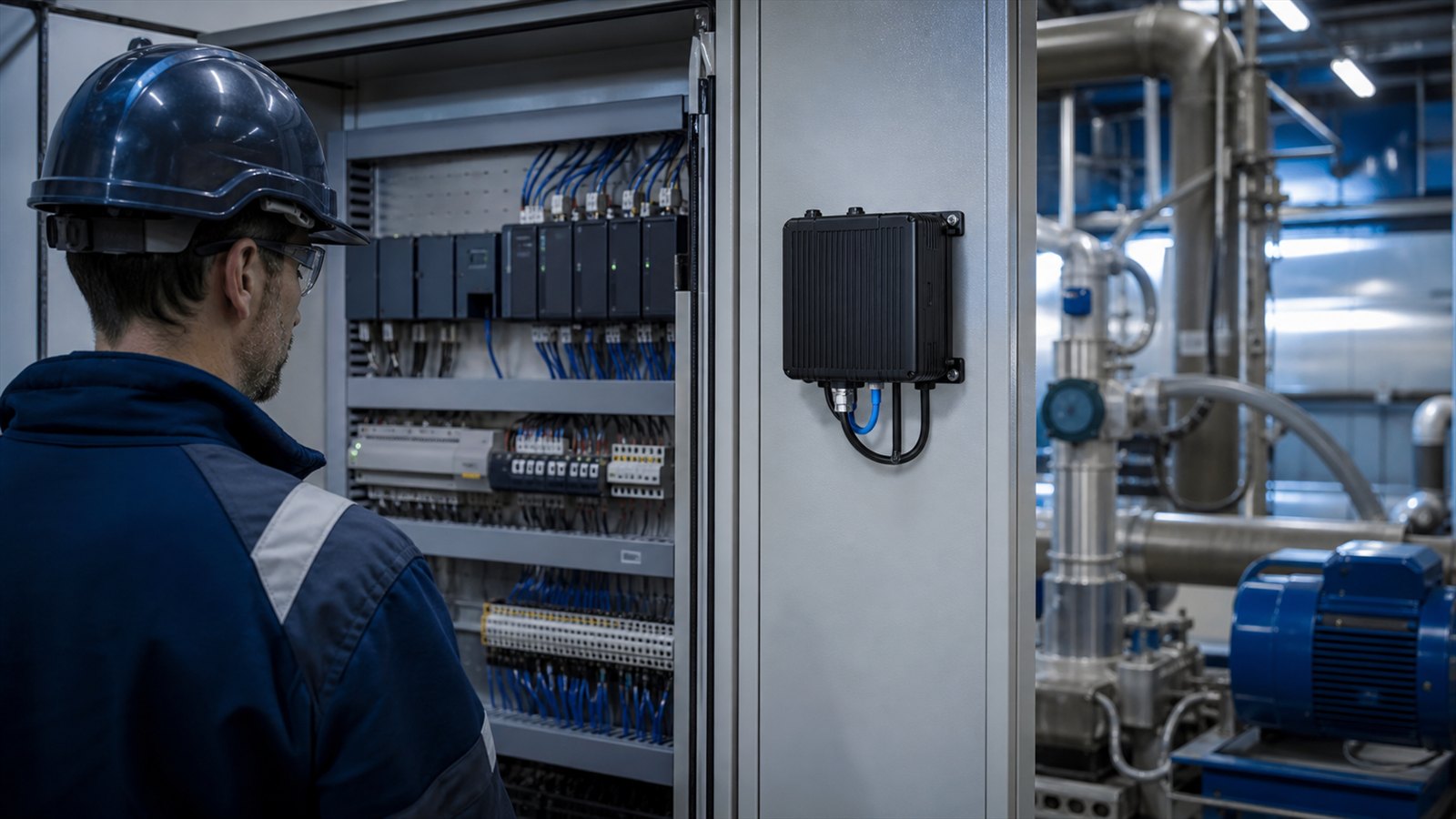
Where suitable local compute is not available, BiaEdge provides a standardized option for running applicable BiaSense workloads near the equipment. It is an enabling component, not the center of the customer value proposition.
This host flexibility allows deployment architecture to follow the site’s operating reality rather than a hardware sales requirement.
Connect rather than displace
BiaSense complements existing controls and systems of record. A SCADA system should continue to supervise the process. A historian should continue to preserve operating data. A CMMS should continue to manage maintenance work. An inspection platform should continue to hold its approved records.
BiaSense brings selected information together and applies engineering physics and machine learning. Bia presents the resulting evidence and guidance through a focused workflow. When appropriate, outputs can be returned through approved interfaces so workers do not need to abandon the tools they already use.
A more scalable deployment model
Custom engineering may be necessary during an initial integration, but the enduring product should be repeatable. BiaTech’s objective is to standardize connectors, model deployment, security patterns, user roles, and application workflows while accommodating the equipment and infrastructure found at different sites.
A focused pilot establishes what data is available, which hosting pattern is appropriate, and whether the guidance improves one measurable operational decision. Once validated, the same BiaSense application can be expanded across similar assets or sites without rebuilding the solution from the beginning.
That is the practical meaning of deployment flexibility: meet the customer where the data and compute already reside, add only what is necessary, and create a repeatable path from one workflow to broader adoption.