More screens do not necessarily create more clarity
Industrial facilities have invested heavily in sensors, controls, historians, alarms, dashboards, inspection systems, and asset-management tools. These systems perform essential functions, but workers may still need to interpret fragmented information under time pressure.
An operator may see that pressure is rising, vibration is changing, or production is slowing. The screen shows what changed. It may not explain why it changed, what related variables matter, or which action should be considered first.
The problem is often not a lack of data. It is the distance between data and a defensible operating decision.
Guidance should answer the next practical question
Real-time engineering guidance should make the next decision easier. It should connect observations with equipment behavior and communicate the result in language that fits the worker’s task.
Useful guidance might say that a developing condition is consistent with a particular physical mechanism, identify the signals supporting that assessment, and present operating options within approved limits. It should distinguish urgent conditions from items that simply deserve monitoring.
This is different from adding another visualization. A dashboard asks a person to interpret a new screen. Guidance helps the person understand what deserves attention and why.
Working with systems already in place
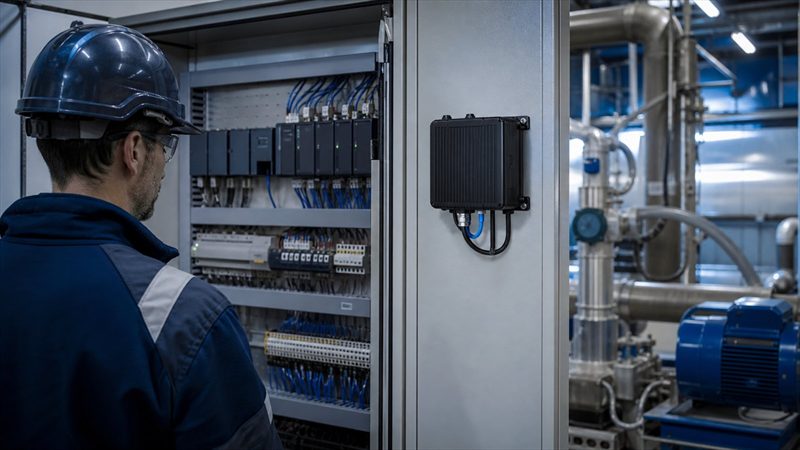
The BiaSense Platform is designed to connect with existing sensors, control systems, historians, inspection tools, and operational data. It does not require a customer to discard working SCADA, PLC, MES, CMMS, drilling-control, or asset-management systems.
BiaSense evaluates relevant information with engineering physics and machine learning, and Bia presents advisory guidance through an appropriate interface. Depending on the use case and approved architecture, computation can occur on existing qualified local infrastructure, BiaTech edge hardware, private cloud resources, or a combination.
Existing controls continue to perform their intended functions. BiaSense provides a decision-support capability above and alongside them.
Trust requires context, boundaries, and evidence
Industrial workers will not adopt recommendations simply because they were produced by AI. Guidance must be understandable and grounded in the operating context.
A trustworthy advisory system should show which signals influenced the assessment, identify important assumptions, communicate uncertainty appropriately, and remain inside defined engineering and operating boundaries. It should also respect user permissions and preserve a record of recommendations and responses.
BiaSense is built around a human-in-the-loop approach. Operators and engineers remain responsible for the decision. Early deployments can run in shadow mode, allowing teams to compare guidance with actual operations before it becomes part of the active workflow.
Begin with one workflow and one measurable outcome
The best starting point is not an enterprise-wide promise. It is one recurring, valuable decision: improving drilling performance, identifying developing equipment risk, prioritizing inspection, reducing process variability, or supporting troubleshooting.
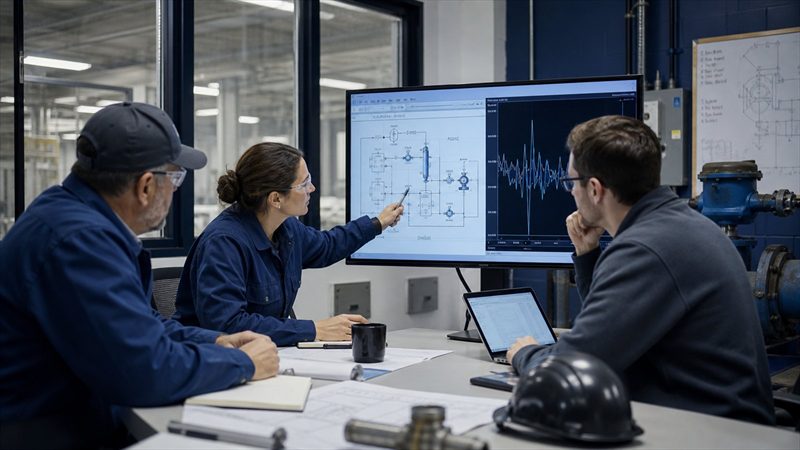
A focused pilot creates space for operators, engineers, and digital teams to validate the data, the engineering logic, the user experience, and the business value together.
The goal is simple: fewer screens that require interpretation and clearer guidance when a skilled worker needs to act.