Industrial operations do not live entirely in the cloud
Enterprise computing provides powerful tools for data aggregation, fleet analysis, collaboration, and long-term model management. Yet industrial decisions often occur beside a machine, on a drilling rig, inside a plant, or at a remote asset.
Connectivity may be limited or intermittent. Sending large sensor or image streams offsite may be impractical. A workflow may also require a response closer to the pace of the operation than a remote processing cycle can provide.
These realities make industrial AI a workload-placement problem, not a debate in which either the edge or the cloud must win.
Why compute near the equipment
Local computation can process high-frequency signals, images, or engineering models near their source. It can reduce the amount of raw data transmitted, preserve a useful local workflow during certain connectivity interruptions, and support customer requirements for data residency or network separation.
For an operator, the important outcome is not where a model runs. It is whether guidance arrives at the right time, uses the relevant operating context, and remains available through the approved interface.
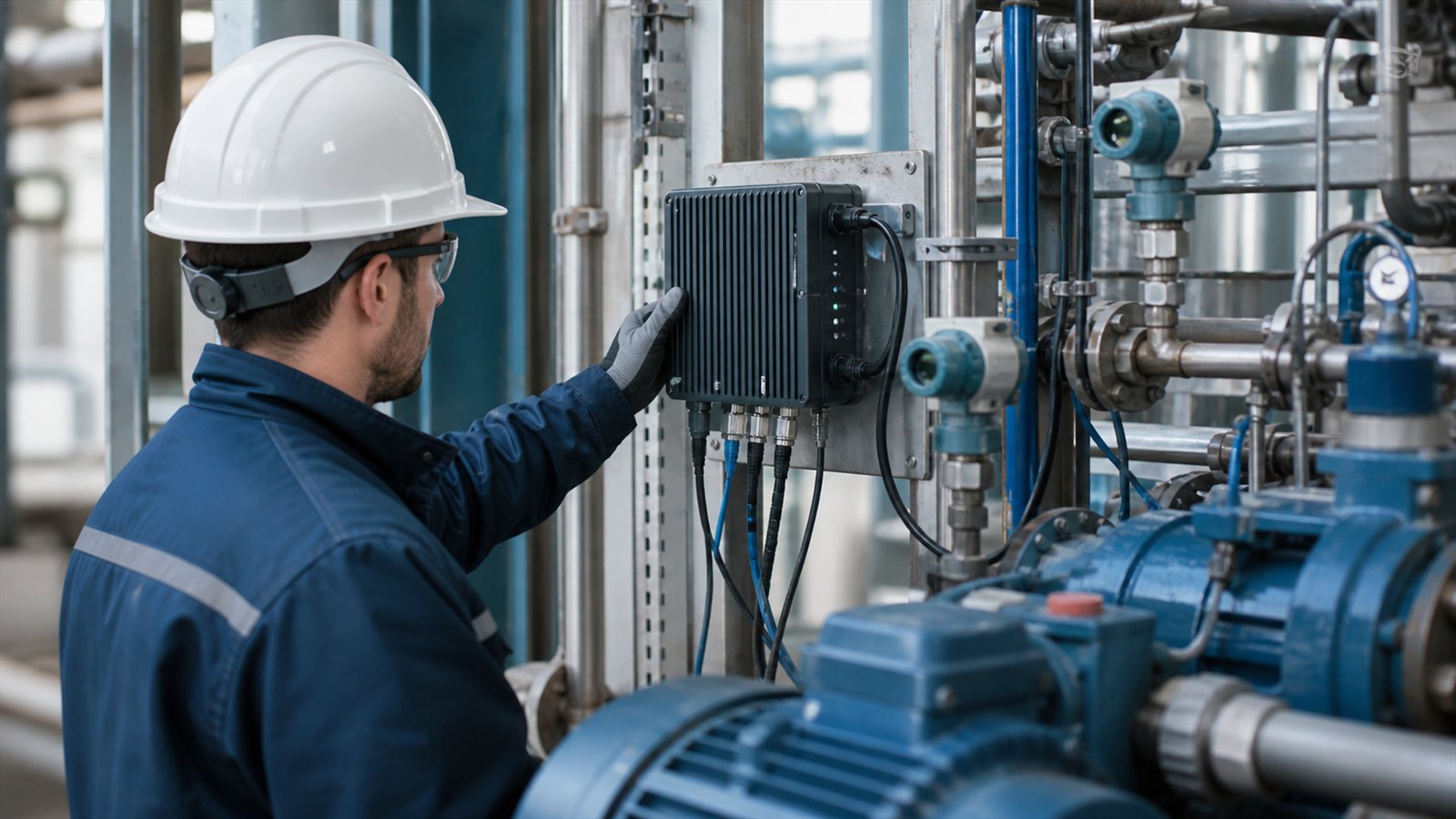
BiaEdge is a supporting BiaSense capability for deployments that need qualified local GPU-accelerated compute. When suitable customer infrastructure is already available, BiaSense can be deployed using that environment subject to compatibility, performance, and cybersecurity requirements.
What belongs at the enterprise level
Not every task belongs at the edge. Enterprise or private-cloud resources may be the better location for cross-site comparison, longer-term analytics, model governance, user administration, reporting, and controlled software updates.
A well-designed architecture divides responsibilities deliberately. Local resources can perform time-sensitive ingestion, inference, and advisory functions. Enterprise resources can coordinate models, users, history, and learning across approved sites.
BiaSense is designed to connect these levels so the worker experiences one coherent application rather than a collection of disconnected technical components.
Deployment should follow the operational constraint
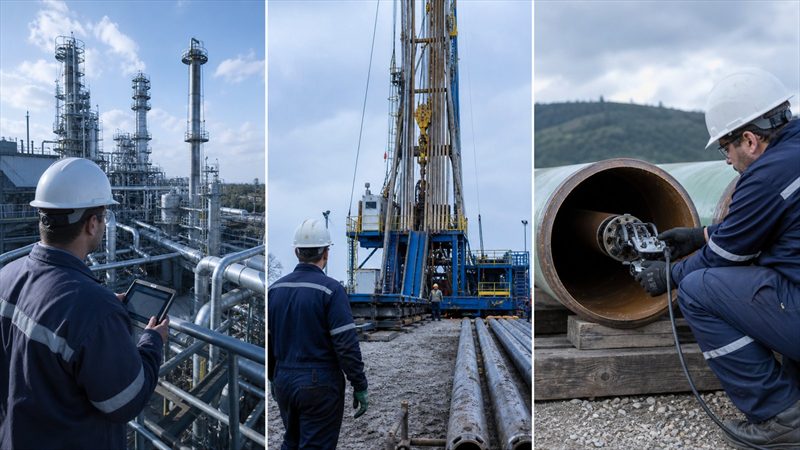
The correct architecture varies by customer and workflow. A drilling application, inspection system, pipe mill, and water facility may have very different data rates, network policies, available hardware, and response requirements.
BiaTech begins by mapping the decision, the data path, the existing infrastructure, and the customer’s security requirements. The deployment pattern can then be selected: customer-hosted edge compute, BiaEdge hardware, on-premises servers, private cloud resources, or an approved hybrid.
This flexibility avoids forcing every customer into a single technical template while still maintaining product discipline around the BiaSense Platform.
One decision workflow from edge to enterprise
Edge computing becomes valuable when it improves the operating workflow. It should not create another isolated box that the customer must manage without context.
BiaSense connects equipment-side observations with engineering models, digital twins, and machine learning. Bia presents the resulting guidance in plain English. Authorized enterprise users can receive the broader operational view, while field personnel receive the information relevant to the immediate decision.
The result is an edge-to-enterprise architecture built around people and operational outcomes: compute placed where it belongs, data handled according to customer requirements, and guidance delivered where consequential decisions happen.