The tradeoff between fidelity and speed
Detailed engineering simulations help teams understand fluid behavior, structural loading, heat transfer, degradation, and equipment performance. They can also require specialized preparation and significant computation, making them difficult to rerun for every changing operating condition.
Simpler empirical models respond more quickly but may lose important physical context. Purely data-driven models can recognize patterns, yet they may behave unpredictably outside the conditions represented in their training data.
Physics-informed machine learning, or PIML, offers another approach: use engineering physics to shape how a machine-learning model is built, trained, evaluated, or constrained.
Learning within the boundaries of engineering
PIML does not remove physics from the analysis. It incorporates physical relationships, boundary conditions, conservation principles, equipment geometry, material properties, or known operating limits where appropriate.
Machine learning can then help approximate complex relationships, update model behavior with operating evidence, or reduce the computation required for repeated evaluations. The result can make engineering analysis more accessible inside a live workflow without treating the equipment as an unexplained statistical pattern.
This is especially valuable when conditions change continuously and the engineering question must be revisited throughout an operation.
Supporting operational decisions
Within the BiaSense Platform, PIML can support applications such as drilling-fluid behavior, drill-string loading, equipment performance, and asset degradation. BiaML is a supporting capability used to prepare, validate, and operationalize applicable physics-informed models; it is not a separate promise disconnected from the industrial workflow.
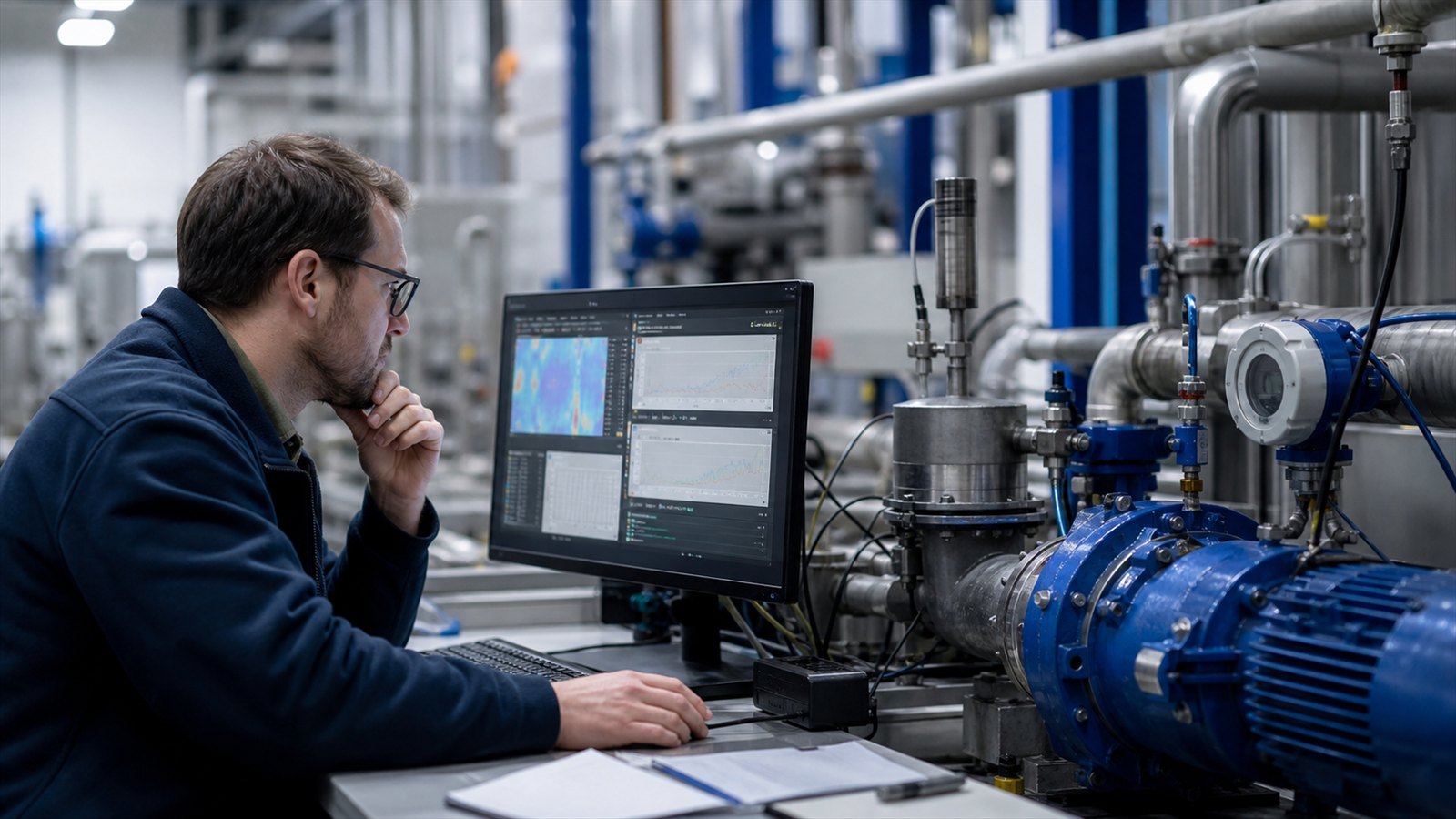
Once a model has been appropriately validated, BiaSense can compare live or recent data with expected physical behavior, identify developing deviations, and evaluate possible operating conditions. Bia presents the findings to authorized users.
The objective is not to replace engineering judgment. It is to make relevant engineering analysis available closer to the time and place where the judgment is needed.
Validation remains essential
A model that contains physics is not automatically correct. Input quality, assumptions, boundary conditions, calibration data, operating range, and model uncertainty all affect the result.
Industrial PIML therefore requires disciplined validation. Teams should define where a model is applicable, compare its output with accepted engineering analysis and observed behavior, and identify when the system should defer rather than recommend.
As operating data accumulates, the model can be monitored for drift and reevaluated when equipment, process conditions, or operating practices change. Traceability is as important as computational performance.
From specialist analysis to shared guidance
Many industrial organizations depend on a limited number of experienced specialists who understand how data, equipment, and physics fit together. PIML can help encode portions of that repeatable analysis and make it available to a wider operating team.
Bia can then communicate the result through focused visual guidance or the Ask Bia plain-English interface. The specialist still defines the engineering basis and boundaries. The platform helps deliver that knowledge consistently within the workflow.
The strategic value of PIML is not simply a faster calculation. It is the ability to connect credible engineering reasoning with live industrial decisions at scale.